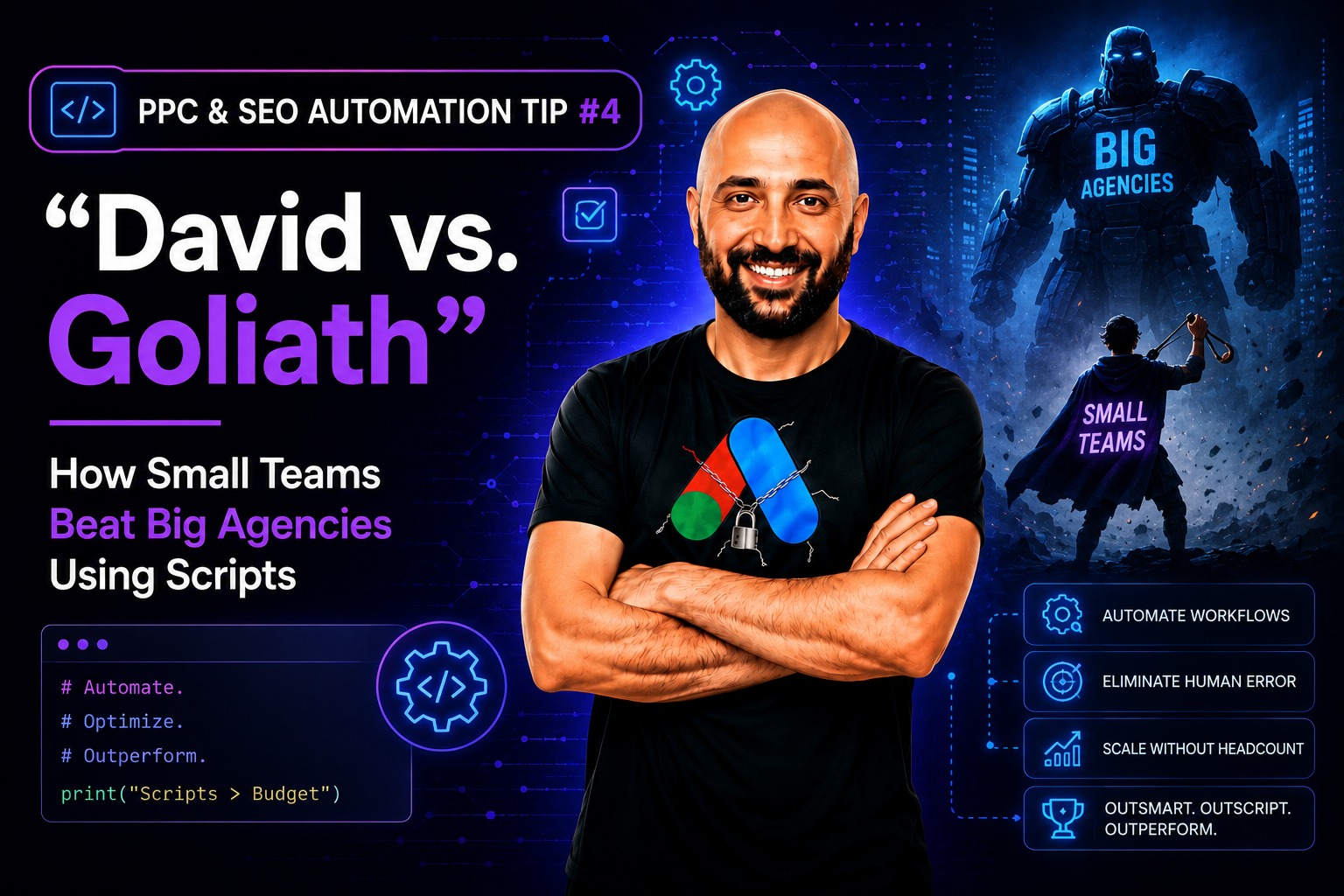
There is a myth that to win in competitive markets, you need a 20-person marketing team. Ten years ago, that was true. Today, small teams beat agencies constantly, because a single freelancer with the right automation stack can outmaneuver a bloated agency team that relies on manual labor.
Big agencies often charge premium fees for “account management,” which frequently amounts to a junior employee manually checking bids and pulling reports once a week. This is slow, reactive, and prone to error.
Automation allows you to be proactive and omnipresent.
Why Small Teams Beat Agencies When They Automate
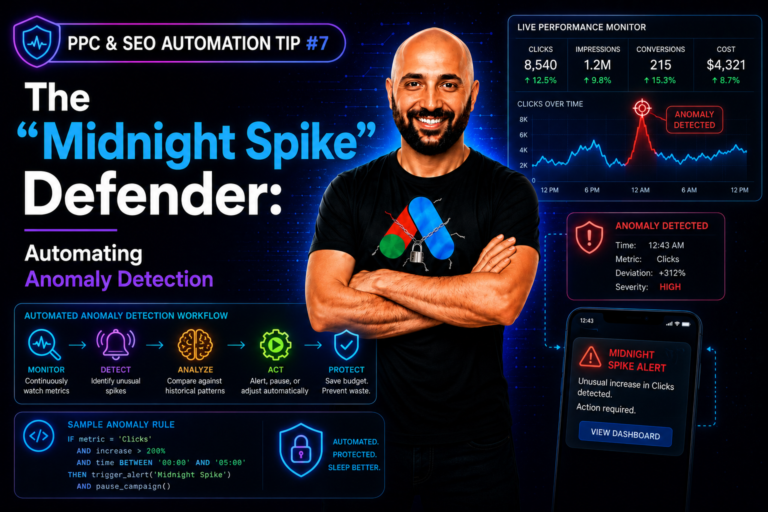
- While they sleep: Your script adjusts bids based on 3 AM competitor weakness, scheduled the same way a bulk campaign scheduler handles recurring, rules-based changes.
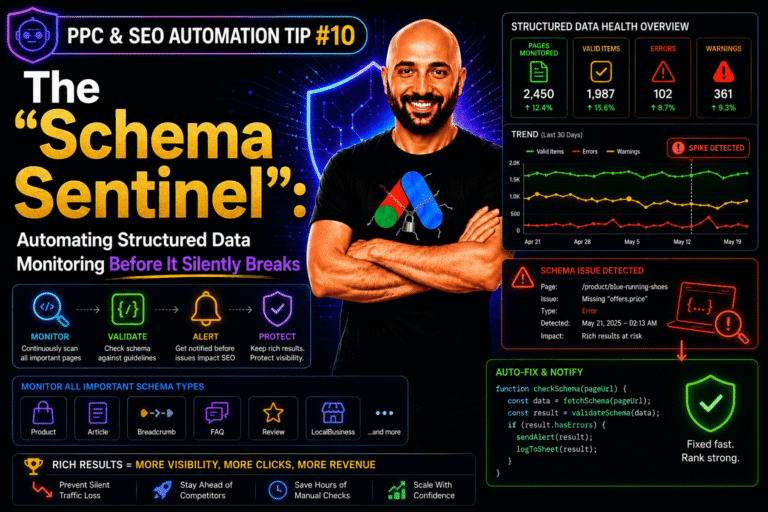
- While they meet: Your automation detects a drop in CTR on a key landing page and alerts you instantly via Slack.
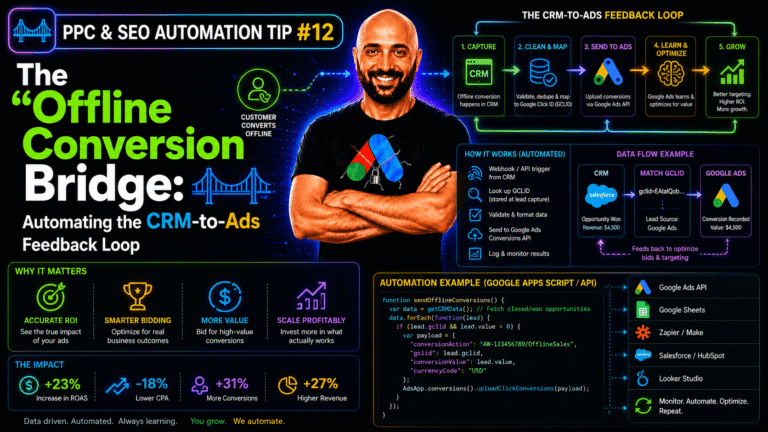
- While they pivot: Your n8n workflow automatically pushes offline conversion data from your CRM back into Google Ads to train the pixel faster than they can upload a CSV — the exact mechanism we broke down in the Offline Conversion Bridge.
Automation is the great equalizer. It turns your time into a force multiplier. You don’t need more bodies in seats; you need more logic in your code. At the PPC SEO Automation Lab, we build the slingshots that let Davids take down Goliaths.
The Real Math Behind Small Teams Beating Agencies
A typical agency retainer bundles in the cost of a junior account manager whose main job is watching dashboards and pulling weekly reports — work a script does continuously, for a fraction of the cost, without a weekend off. If that junior’s time is worth even a modest hourly rate, the manual monitoring alone can represent thousands of dollars a month that’s paying for reaction speed, not strategy. A small team running the right scripts gets the same (often faster) reaction speed, and redirects that budget straight into ad spend or actual strategic work.
Common Mistakes Small Teams Make When Automating
- Trying to automate everything at once: Start with the highest-cost, highest-frequency manual task first — usually bid monitoring or alerting — rather than attempting a full account overhaul in one go.
- No human review layer: Automation should alert and act on clear rules, but strategic decisions (creative direction, targeting shifts) still need a person reviewing the “why,” not just the “what.”
- Building in isolation: Scripts that don’t talk to each other (bid checks, inventory checks, alerts) create blind spots. The real advantage comes from connecting them, which is where custom script development pays off over a patchwork of one-off tools.
Frequently Asked Questions
Can a small team really compete with a large agency using automation?
Yes — the reaction speed and consistency automation provides often matters more than headcount. A single person with well-built scripts can monitor and react to more signals than a small team checking dashboards manually.
What’s the first automation a small team should build?
Whatever manual task currently eats the most hours per week with the least strategic value — usually bid threshold monitoring or CTR/performance alerts, since both are simple to build and immediately save reaction time.
Does this replace the need for strategy or creative work?
No. Automation handles the repetitive monitoring and reacting; the small team still needs to make the strategic calls on targeting, messaging, and creative direction that automation can’t make on its own.
#ppc_seo_automation_tips
Leave a Reply